
Containment first
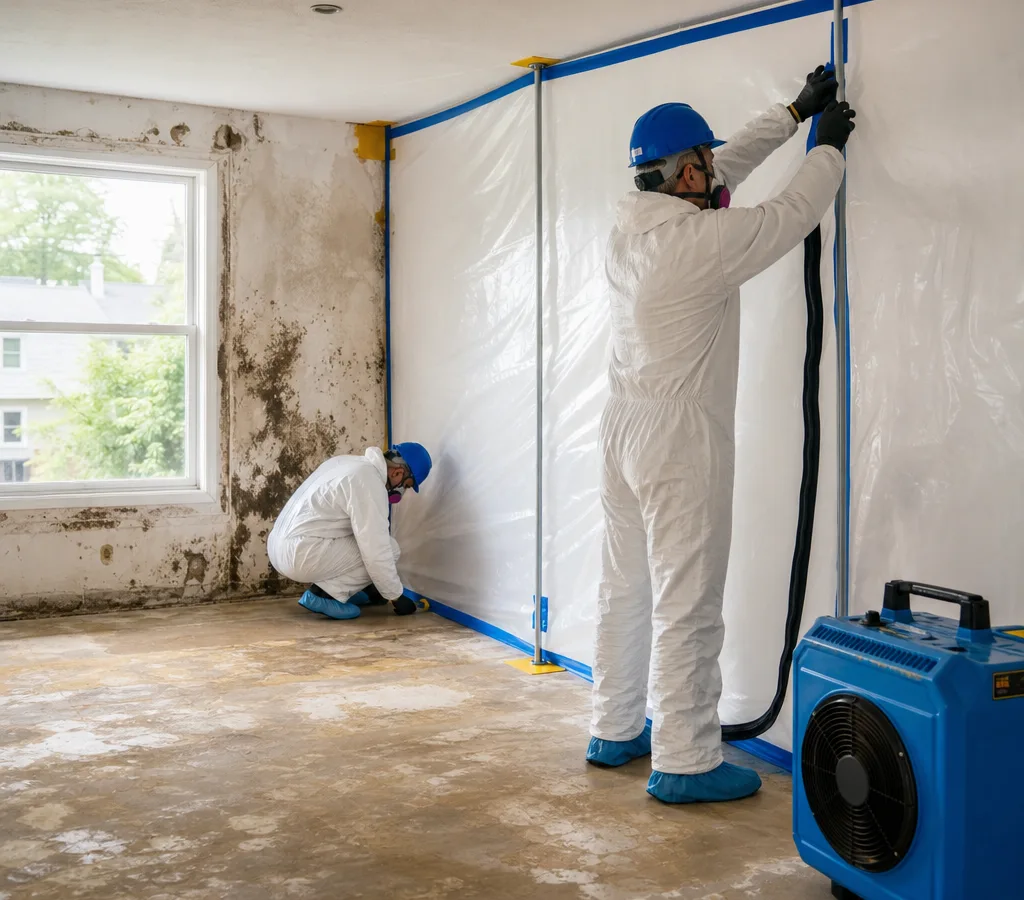
We isolate the affected area with plastic sheeting, sealed doorways, and negative air when needed, so spores stay in the work zone and do not drift into hallways, bedrooms, or HVAC returns.
Serving Nashua, New Hampshire & surrounding areas
Contain mold before it spreads through your property. If you smell musty odors, see staining, or had a recent leak, we can inspect, contain, remove contaminated materials, and treat the area.
Skip the 3-hour Google rabbit hole — we’ve already done the vetting
One conversation, not ten voicemails and seven web forms
24/7 emergency response — talk to a real person who actually knows Nashua
A real person answers - 24/7 Emergency Response
Searching for mold remediation Nashua NH usually means something urgent: water got in, the smell will not go away, or someone in the home is reacting. Mold is a moisture problem first and a cleanup problem second. The right approach is to find where the moisture is coming from, isolate the work area so spores do not travel, remove what cannot be saved, and clean and treat what can.
At Water Damage Nashua, our mold remediation work is built around containment and clear scopes. You will know what areas are affected, what gets removed versus cleaned, how we will keep dust and spores out of the rest of the property, and what needs to happen to prevent the same growth pattern from returning.
Many properties in Nashua have finished basements, tight utility rooms, and enclosed closets where air movement is limited. When humidity stays high after a leak or condensation event, those spaces can grow mold quietly until you notice odor, staining, or warping. A proper remediation plan accounts for access, materials, and how the air moves through the house.
We isolate the affected area with plastic sheeting, sealed doorways, and negative air when needed, so spores stay in the work zone and do not drift into hallways, bedrooms, or HVAC returns.
Colonized porous materials such as drywall, insulation, and some carpet padding are typically removed. Semi-porous and non-porous materials are cleaned and treated when they can be restored safely.
We use HEPA vacuuming and damp wiping on framing, subfloors, ledges, corners, and other surfaces where spore dust settles.
Moisture readings guide what needs to come out and when the area is dry enough to close. If moisture remains, mold can return even after thorough cleaning.
You get a written scope covering the areas addressed, materials removed, equipment used, and next steps for repairs or repainting.
We explain what to fix or change so conditions do not repeat, such as improving ventilation in a closet, addressing a recurring leak, or managing basement humidity.
Mold rarely appears in a convenient spot. It shows up where moisture sits and air stays still. These are some of the situations that most often trigger remediation work:
If your situation started with flooding, a burst pipe, or a major leak, safe drying and stabilization come first. Remediation follows once the affected materials and work area have been identified.
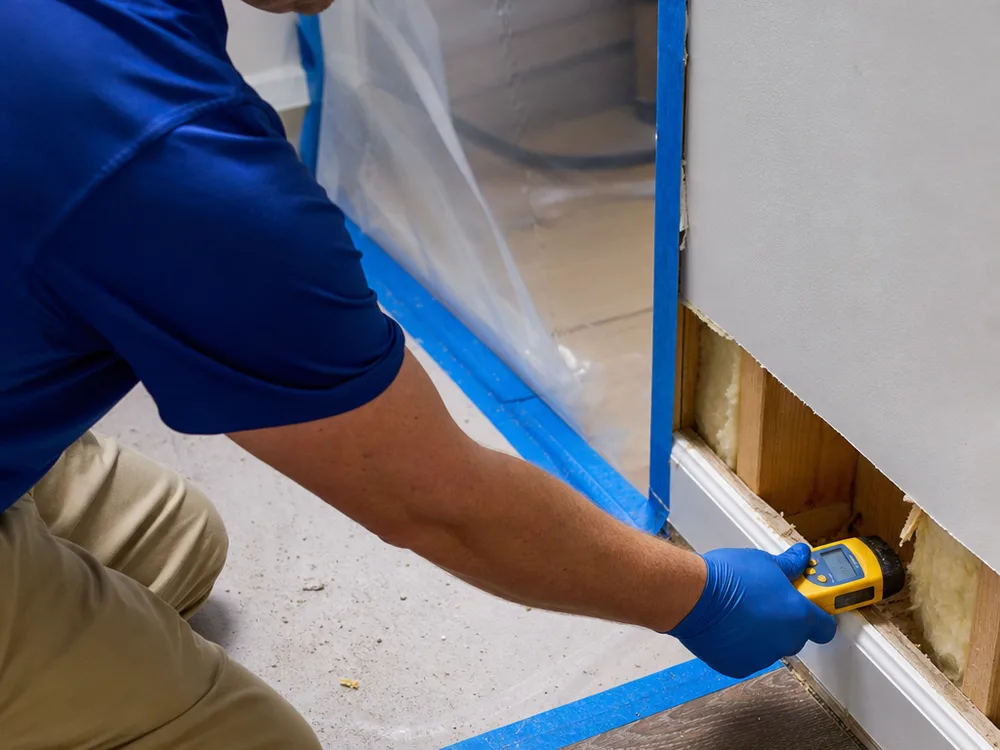
We assess visible growth and the likely moisture source, then define the work area. When mold is suspected behind finishes, we discuss what limited demolition may be needed to confirm conditions.
We seal the work zone with poly sheeting and controlled entry. When appropriate, negative air and HEPA filtration capture airborne particles during removal and cleaning.
Drywall, insulation, carpet padding, and other materials that cannot be reliably cleaned are removed, bagged, and carried out through a protected path.
We HEPA vacuum and clean remaining structural surfaces. When appropriate, antimicrobial treatment and detailed wiping address ledges, framing, and floor edges.
If moisture remains elevated, drying equipment may be used until readings indicate acceptable dryness. The goal is a clean, dry area ready for repair without trapping moisture behind new finishes.
We review what was done and removed, plus what should happen before rebuild, such as confirming the leak is fixed or improving ventilation.
Mold remediation in Nashua typically ranges from about $1,000 to $6,000 for many residential jobs. Small, contained areas may be closer to $750 to $1,500, while larger multi-room or hidden-growth projects can run $6,000 to $15,000+.
The final price depends on how far contamination extends, which materials need removal, the containment and filtration required, access in tight basements, crawlspaces, or attics, and whether drying equipment is needed. Exact cost is confirmed after an on-site inspection and written scope.
“We had a musty smell that kept coming back in the basement. The crew contained the area, pulled the wet drywall, and cleaned the framing. The difference in odor was immediate, and they explained what to change so it would not return.”
“After a slow leak under the kitchen sink, mold showed up behind the cabinet. They were direct about what needed to be removed versus cleaned, and the work area stayed sealed off the entire time.”
Tell us what you are seeing and where it started. We will walk the area, explain what needs containment and removal, and provide a written scope you can make decisions with.